
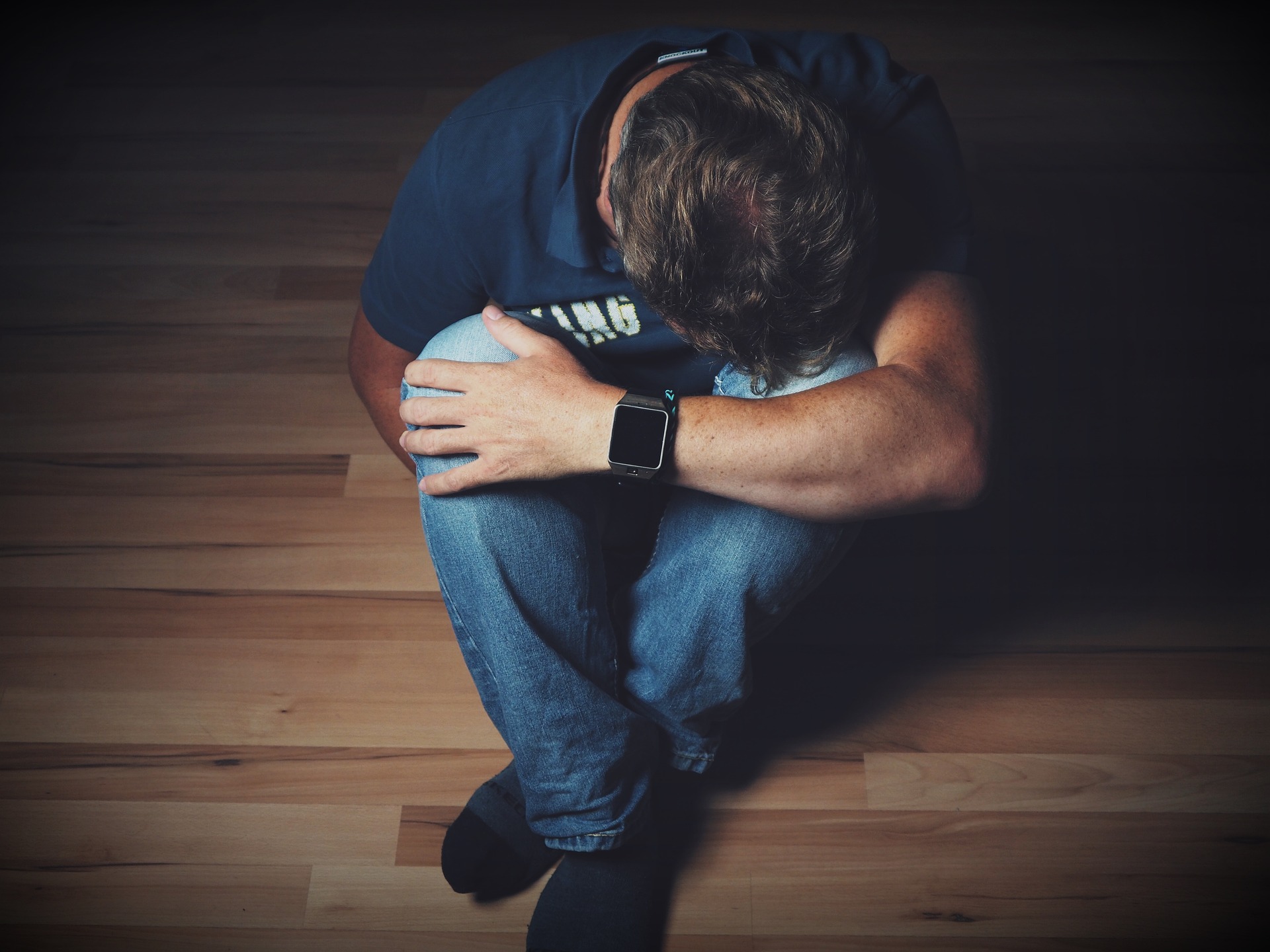
Why breaking the silence about suicidal struggle is an act of love, for yourself and for others.
CONTENT WARNING: This post discusses suicidal feelings and ideation. If you or someone you know is struggling, help is available. Please contact the Suicide and Crisis Lifeline at 988 or text TALK to 741741.
In the earlier part of my life, even when I was going through some of my greatest challenges, I struggled to understand the thoughts and feelings of those who wished to end their emotional and sometimes physical pain through suicide. I could feel their distress, but I wouldn't probe too deeply out of respect for them. The most I could offer was a shoulder to cry on, an ear when needed, and emotional safety when allowed.
It wasn't until I started going through conversion therapy that I began to understand the kind of distress that leads someone to consider taking their life. For me, it took the form of doing everything I was told to do to convert my attraction to men into attraction to women, and seeing nothing to show for it.
My attraction to men continued, and if anything, grew stronger because I was suppressing such an essential part of myself. I kept asking God, "Why won't you take these feelings from me? I'm begging, I'm pleading, and if you are the loving God I'm told you are, why are you standing back and watching me suffer?"
I never got an answer to that question. What I felt instead was a quieter question rising from deep inside: why was I torturing myself? Why was I choosing to believe what others wanted for me? From the Divine's perspective, there was nothing wrong with me or my desire to seek companionship and intimacy with someone of the same gender. What the Divine wanted for me was my happiness, nothing more.
I ignored what I felt, because the external voices of those trying to "repair" me were screaming at me not to trust the whisperings of my heart. "Wickedness never was happiness," they said. What I felt was deception, not truth. Not to be trusted.
By my late teens, I had already faced abandonment, emotional abuse, sexual abuse, and religious manipulation. In the 1970s and 80s, children and young adults were discouraged from seeing therapists, especially in high-demand religious communities. In the Latin culture I was also raised in, therapy was even more taboo. Only crazy people or eccentric rich women saw therapists, according to my mom. Regular people didn't need them.
And so the cognitive dissonance was left to fester, and the emotional chasm within me kept widening. I knew what I felt. I knew what my heart wanted. But I believed that if I listened to what my heart truly wanted, I would be cut off from God and my family for all eternity.
I always felt connected to something greater than myself. It was a deeply personal and special connection, one I didn't yet have words for. All I knew was that I never felt judged or rejected from that place. All I felt was comfort and love, and the quiet assurance that no matter what, I would be okay.
But the messaging from my church, community, and parents was relentless: any feeling that inspired me to look beyond the narrow confines of what I was told to believe wasn't to be trusted. The only things I could trust were the institution, the "approved" religious texts and narratives, and my ecclesiastical leaders. Correction: my parents were also on the list, but if they taught me anything that didn't mirror the church's teachings, then, well, that was unfortunate, because they could be leading me to apostasy.
I was taught to live in fear. If what I felt stayed within the narrow parameters given to me, it was the still, small voice of the Holy Ghost. If I felt something else, something more expansive, loving, and accepting of me as I was, the Adversary was trying to deceive me.
It wasn't until a fraternity brother took his own life that I was forced to look squarely at the conflict within me. He had everything going for him. He fit the profile of the perfect Mormon man: white, straight, returned missionary, nearly finished with his university degree, and supposedly next on the checklist, marriage and children.
He didn't say anything to anyone. He just took his life. No one understood why, and no one talked about it. Suicide was treated as a footnote, punctuated only by a passing comment that it was "a permanent solution to a temporary problem."
The cruelty of that phrase is that no one knew what the problem was. I was shocked by the way the people around me treated his death, as if he had been written off for daring to take his own life.
The saddest part of that experience was that I understood his unspoken struggle, because I was living my own. I was in the middle of conversion therapy. No one could know my real feelings. I kept one of the most essential parts of myself stuffed down, hidden from view, afraid of the condemnation that would come if I ever let it surface.
I couldn't talk to anyone. I was surrounded by fear and judgment, spoken aloud or whispered in gossip. My ecclesiastical leaders made clear what the church’s teachings were on homosexuality. I didn't doubt that my mom loved me, but she was afraid of how "the world would react" if I listened to the call of my heart.
The only therapist I had access to was required to stay within the lane prescribed by the church, although I could sense he wanted to do more. All he could offer were ecclesiastical talking points with some actual psychology sprinkled in. I had nowhere to turn.
Then, more people I knew started taking their lives, all of them from the conversion therapy support groups I attended. The only response offered was the same phrase, repeated until I almost believed it myself: a permanent solution to a temporary struggle.
But that part of me I've spoken of, the part that could sense what was going on around me, perceived the common thread linking each death. They felt isolated and completely defeated by beliefs that kept them trapped in a cycle of hopelessness. They suspected (and some knew) they were being lied to, but they felt they had no one and nowhere to turn. They saw no light at the end of the tunnel. Only darkness and despair.

I was looking down that same tunnel.
Here's the thing: I understand that to an outside observer, someone's struggles are, indeed, temporary. But I ask you to put yourself in the shoes of the person with the struggles. They don't see the struggle through the same lens, especially if they feel that they have no one to talk to. In my personal experience, I knew that my struggle wasn't temporary. It was lifelong. Therefore, seeking a permanent solution to a permanent problem was a logical option.
I barely survived conversion therapy, and when I had an opportunity to move away from the church and community that caused so much pain, I took it. I spoke of my post-conversion therapy experience in my Coming Out of Closets post, but what I left out was a particularly dark period in 2023 when I again came very close to taking my own life.
I found myself completed isolated for the second time in my life, partly due to misinformed choices I made, and partly due to external circumstances I won't detail here. What I can say is that the loneliness I felt then was far worse than anything I experienced during conversion therapy. I survived because I had enough presence of mind to call the Suicide and Crisis Lifeline. It was, in the most literal sense, a lifeline. I unloaded everything I was carrying, and for the first time in a long time, I felt relief.
That moment began the journey to where I am now.
I choose to share this publicly and vulnerably, because silence is what almost took my life. Silence takes too many lives.
I won't pretend to know the private struggles each of us carries. I can only share my own experience. I reached deep inside for the courage to speak up, found someone willing to listen without judgment, and in that moment, I felt hope again.
I respect and honor every person's choice to keep their struggles within a trusted circle. I am choosing this path for myself because I don't want anyone to feel as isolated and alone as I once did.
My simple plea is this: don't suffer alone or in silence. Dialing 988 was the decision that kept me alive. Having someone listen and hold space, without judgment, is why I'm writing this today.
If you or someone you know is struggling, please reach out. The Suicide and Crisis Lifeline is available at 988. You can also text TALK to 741741. You are not alone, and your life matters more than any story fear has told you about yourself.
With great love, Appio 🌿